
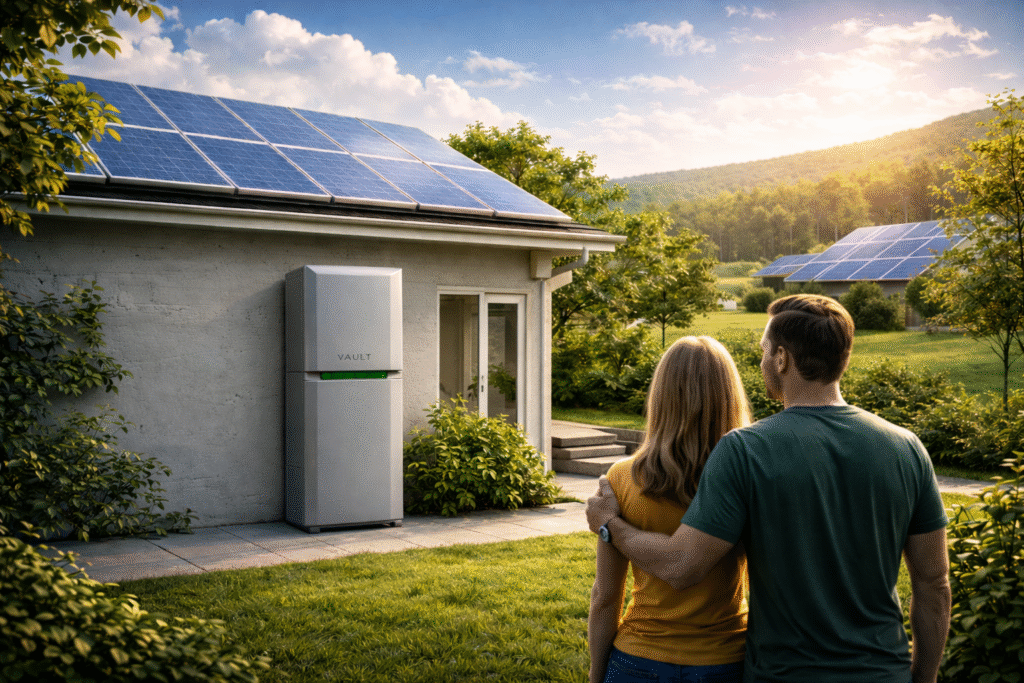
Electricity prices in Europe are rising faster than general inflation. Peak
tariffs increase, grid fees grow, and price volatility becomes structural as
renewable penetration expands. Households cannot control these
forces, but they can reduce their exposure to them.
A battery energy storage system (BESS) acts as a personal inflation
hedge by reducing reliance on expensive grid imports, stabilising long-
term electricity costs, and preserving the value of home solar
generation. For many households, this makes a battery comparable to a
long-term financial stabiliser built directly into the home.
Why energy inflation is accelerating
Electricity is not a stable commodity. Its price reflects fuel costs, system stress, transmission
constraints, capacity shortages, and weather-driven variability.
As Europe electrifies transport and heating, electricity demand grows faster than grid expansion.
This imbalance puts upward pressure on prices over time. Households experience not only higher
average prices, but sharper and more frequent peaks.
Inflation in electricity markets is increasingly structural rather than temporary..
Why a BESS reduces the impact of inflation
A battery cannot stop inflation, but it can reduce how much of it reaches the household.
Stored energy replaces the most expensive grid imports. Solar electricity stored in a BESS is used
during high-tariff evening hours instead of being exported at low daytime prices and repurchased
later at higher cost.
This directly reduces exposure to inflation-driven price peaks. Over time, the effect compounds into
a stable, long-term economic benefit.
Why controlling timing is an inflation hedge
Electricity inflation does not hit evenly.
It concentrates in specific hours: winter evenings, periods of low renewable output and times of
grid congestion.
Without storage, the household must buy exactly during these hours at whatever price the system
sets.
With storage, the household shifts consumption away from inflation-heavy hours. Timing becomes
a financial shield.
Why BESS protects the value of your solar investment
Solar panels generate electricity at low marginal cost. Their value erodes when surplus energy is
sold at weak export prices and later repurchased at inflated tariffs.
A BESS prevents this loss. It stores surplus solar production and releases it during the highest-
value hours. This preserves the economic return of the solar system and shields it from rising
tariffs and declining feed-in rates.
From a long-term perspective, this mirrors how capital preservation mechanisms protect value
from gradual erosion.Why long-term stability mimics a pension fund
Pension systems aim to reduce risk, smooth volatility, and preserve value over long time horizons.
A BESS performs a similar role within the household energy balance.
It:
• lowers exposure to price spikes
• reduces the impact of long-term inflation
• keeps the value of solar energy inside the home
• stabilises operating costs
Each effect is modest on its own. Accumulated daily over 10–20 years, they form a meaningful
hedge against energy inflation.
Why households treat BESS as financial protection
Households do not install batteries to speculate. They install them because electricity becomes
more expensive and less predictable. A BESS converts volatility into stability. Stability becomes
protection. Protection supports long-term financial confidence. This is the same principle behind
long-term financial planning: predictable outcomes in an uncertain environment.
Conclusion
Electricity prices will continue to rise as Europe electrifies transport, heating, and industry. Grid
stress will increase. Price peaks will sharpen. Volatility will remain structural.
A BESS is one of the few tools households can use to defend themselves against this long-term
trend. By reducing inflation exposure and preserving the value of solar generation, a battery
functions as a personal inflation hedge, and for many households, a long-term stabiliser
comparable to a private pension mechanism embedded in the home.