
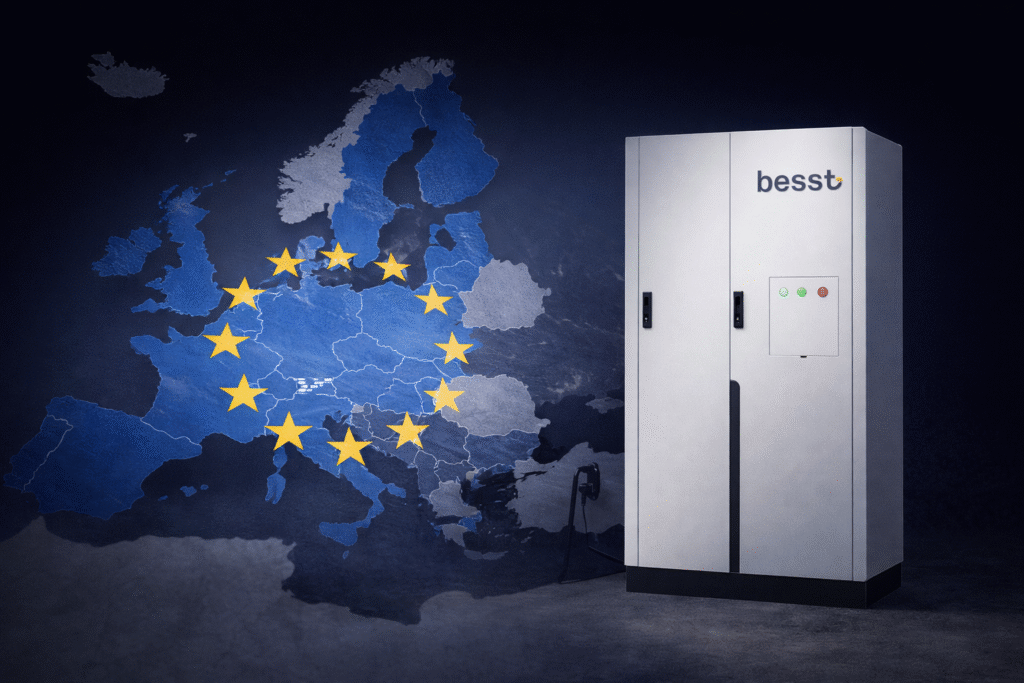
Renewable energy continues to expand, grids face structural congestion, and price volatility is becoming the new baseline. At the same time, Brussels has set explicit flexibility targets for 2030. Together, these forces are pushing Europe into the storage decade.
Renewables keep rising
Solar and wind deployment in Europe has accelerated sharply over the past decade. Annual additions continue to grow, and the share of variable renewables in the electricity mix increases every year.
When solar and wind peak simultaneously, grids experience significant pressure. When production falls, the system requires fast-response capacity to maintain balance. This creates a structural pattern: high output during the middle of the day and sharp ramps in the evening. Storage systems absorb excess generation and release it when it is needed most.
Peak volatility becomes the norm
Price spikes in European electricity markets are no longer exceptional. They occur whenever renewable output changes rapidly or when grid congestion limits power flows. The pattern is clear: near-zero or negative prices during daylight hours in high-solar regions, followed by expensive evening peaks across most markets. Storage bridges these extremes. It shifts energy from periods of low or negative prices to periods of high demand, stabilising the system and reducing the impact of volatility on consumers and businesses.
EU flexibility targets for 2030
The European Commission now treats flexibility as a core requirement of the electricity system. The 2030 framework includes quantified flexibility needs for every member state. These targets cover fast-response reserves, demand response, energy storage, and digital control of distributed resources. This marks a structural shift. Flexibility is no longer optional. It is becoming a regulated pillar of the European electricity market, and storage is one of the most scalable forms of flexibility available.
Why storage becomes inevitable
• Renewables rise every year.
• Grid congestion intensifies.
• Price volatility increases.
• Flexibility targets are set in law.
• Storage costs continue to fall.
When these five trends move in the same direction, the outcome is clear. Europe is entering the storage decade. It is the only way to stabilise a system dominated by variable renewable energy.• Storage smooths peaks.
• Storage handles volatility.
• Storage unlocks more renewable expansion.
• Storage increases energy security.
The decade ahead will be defined by how fast households, businesses and grid operators adopt storage at scale. The countries that move first gain the strongest position in the new energy economy.