
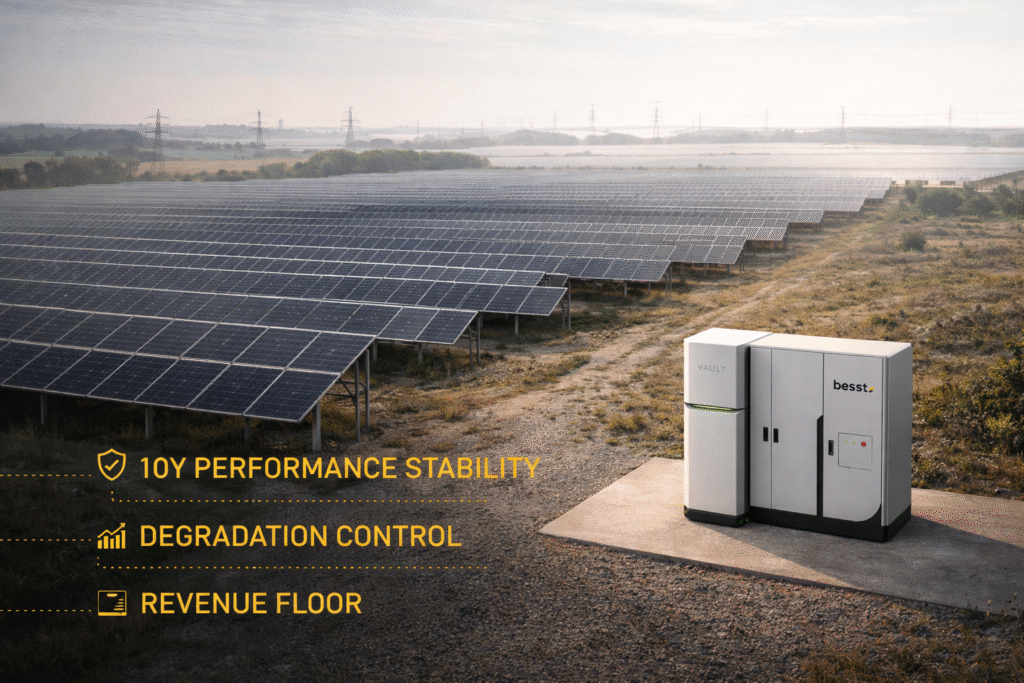
Solar is a long-term asset. Panels last 20–30 years, but the rules that determine how you are paid for surplus energy can change several times over that period. Today, the biggest risk for solar owners is not technical
failure. It is regulatory and market change. Across Europe, net-metering is being phased out. Export tariffs are falling or being linked to wholesale prices. Grid fees and tariff structures are shifting toward peak-based pricing. A battery protects the financial performance of a solar system from these long-term uncertainties.
Why regulation matters more than hardware
The value of a solar installation depends on:
• how much energy you use directly
• how much you import from the grid
• how much you earn or lose on exports
• how tariffs, grid fees, and taxes are structured
Hardware performance changes slowly over time. Regulation can change in a single policy cycle. For most solar owners, the greatest risk is not panel degradation. It is rule changes that reduce export value.
The end of net-metering and why it matters
Net-metering once credited exported solar at the same rate as consumption. That model is disappearing across Europe:
• Spain has moved to net-billing
• the Netherlands is phasing out compensation
• Italy uses mixed structures with lower export value
• Germany pays feed-in well below retail rates
• Nordic markets largely link exports to wholesale prices
As a result, the economic value of exported solar is declining. Solar-only systems remain fully exposed to this shift.
Why export tariffs will not rise
Markets with high solar penetration follow the same pattern:
• midday export prices fall as generation peaks
• wholesale-linked compensation declines as capacity grows
• policy increasingly prioritises self-consumption
This means solar-only households will:
• sell energy at low value
• buy it back at high value• depend on rules they cannot control
This is the core long-term risk of solar without storage.
How storage derisks the asset
A battery reduces exposure to regulation by shifting value from exports to self-consumption.
Storage:
• raises self-consumption from ~30% to ~80–90%
• reduces dependence on export tariffs
• limits exposure to net-billing changes
• avoids peak-priced imports
• stabilises long-term household energy costs
Regulation can change export prices. It cannot change the value of avoided imports. This is why storage is the most effective hedge against policy risk.
Why this matters over a 10-year period
Solar output is predictable. Regulation is not. Over the next 10 years, households may face:
• further export tariff reductions
• changes to grid fees
• evening peak surcharges
• new system charges on imports
• additional taxes on exports
• dynamic pricing replacing flat tariffs
A battery shields system economics from most of these changes. Self-consumed energy has stable value.
Exported energy does not.
Future-proofing the investment
Solar-only systems deliver strong value initially, then weaken as export rules change.
Solar plus storage behaves differently:
• high self-consumption creates stable savings
• low export volumes reduce regulatory exposure
• flexibility aligns with future pricing models
• backup capability adds resilience
The system becomes controlled, not dependent.
Conclusion
You cannot control policy, tariffs, or grid pricing.
You can control how much of your solar energy you keep.
A battery derisks a solar investment by shifting value from uncertain export revenue to stable
avoided costs. This protects financial performance not just today, but over the next decade.Solar captures energy.
Storage secures the return.