
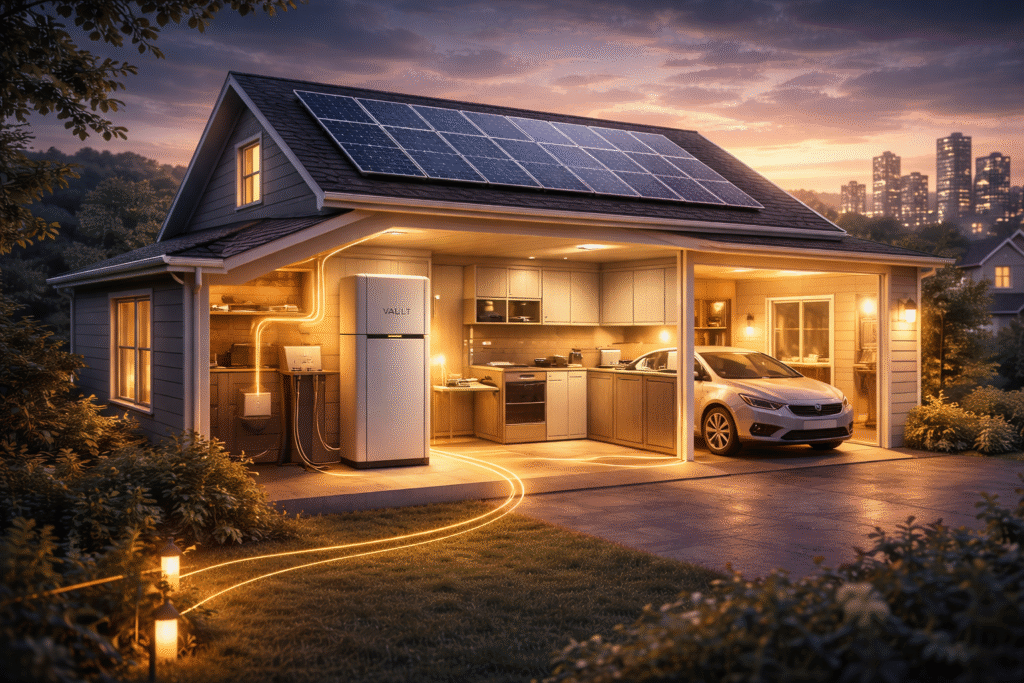
Homeowners with solar panels hit the same wall. Panels alone do not give control. They cut the bill during the day and leave you exposed at night, during price spikes, or when the grid stumbles. A battery turns that weak setup into a complete system.
Solar adoption grows
The International Energy Agency (IEA) reports that rooftop solar capacity continues to expand across Europe and globally. As more households generate electricity at the same time, larger volumes of surplus power are injected into local distribution networks. This increases operational pressure on the grid and makes system balancing more challenging. Rising renewable generation peaks contribute to higher price volatility in electricity markets.
Storage solves the gap
Energy storage captures surplus electricity produced by the home and makes it available during periods when electricity is more expensive or less reliable. This is the core function behind-the- meter battery systems were designed to perform. Both the International Energy Agency (IEA) and BloombergNEF identify residential energy storage as a key tool for balancing variable renewable generation and improving system flexibility.
Why the asset value rises
Homes with higher energy efficiency class ratings consistently achieve higher market values. A battery increases the self-consumption of solar energy, reducing the amount of electricity purchased from the grid. Lower operating costs improve the building’s energy efficiency rating, and a higher energy class directly contributes to increased property value.
Price volatility is not going away
European electricity markets move in peaks. As renewable energy penetration increases, price variability grows and transitions between surplus and deficit periods become sharper. This leads to higher and more frequent price peaks.
Grid stability issues
Many national electricity grids experience congestion during peak demand and high generation periods. Distributed energy storage helps relieve this stress by acting as a local buffer. Homes with batteries reduce their reliance on the grid during critical hours, contributing to improved overall system stability.
The result for the homeowner
• You keep more of the energy you generate.
• You buy less electricity during expensive hours.
• You shield your home from grid-side instability.
• You lift the efficiency class of your property.
• You raise its resale value.
• You future proof the building.Storage is not a gadget. It is the upgrade that matches the world the energy market is moving into.