
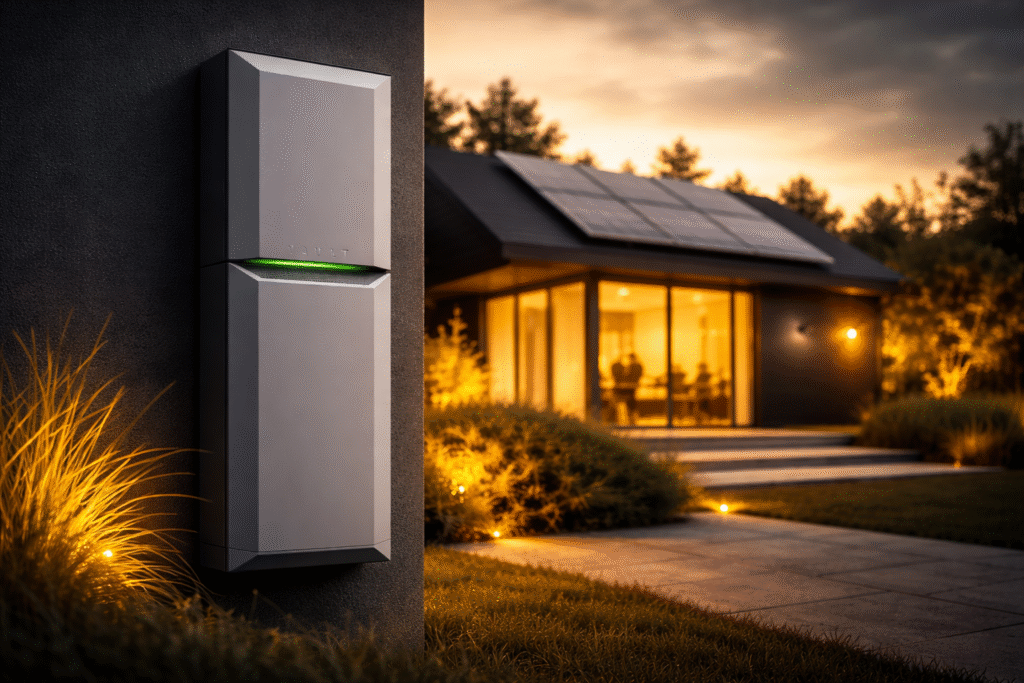
Installing solar panels is the first step toward energy independence. But solar alone is not a complete system. It produces electricity when sunlight is strongest, not necessarily when the household needs it most. The natural second phase is storage. A battery aligns production with consumption, protects the value of the solar system, and prepares the home for today’s electricity market.
Why solar panels alone is only half of the solution
Solar panels generate most electricity in the middle of the day. Household demand peaks later, in the evening. This mismatch means:
• most solar production is exported at low midday prices
• the home buys electricity back during expensive hours
• the system delivers less financial value than expected
Solar reduces part of the bill, but it cannot control when energy is used.
Why storage is the logical next phase
A battery stores surplus solar energy and releases it during high-value hours.
With storage:
• self-consumption rises from ~30% to ~80–90%
• fewer kilowatt-hours are sold cheaply
• more kilowatt-hours replace expensive evening imports
• dependence on grid pricing is reduced
The solar system starts working on the household’s schedule, not the grid’s.
Why the energy market makes storage essential
Electricity prices increasingly move in peaks. Midday prices fall. Evening prices rise. Net-billing reduces export value. Grid stress becomes more frequent.
Solar alone cannot respond to these conditions, a battery can.
Storage provides:
• protection from low export prices
• reduced exposure to peak tariffs
• greater stability during volatility
• Long-term financial resilience
This is why storage is now the second stage of modern solar installations.
Why resilience matters
Solar-only systems shut down during blackouts because grid-tied inverters must disconnect for safety. A battery with backup capability keeps essential loads running.
With storage:
• lights stay on
• communications remain online
• refrigeration continues
• critical household circuits stay powered
Solar alone cannot do this. Storage completes the system.
Why the sequence is always the same
Across Europe, most households follow the same path:
Phase 1: install solar to reduce bills
Phase 2: add storage to retain value, gain control, and increase resilience
Phase 3: optionally join a Virtual Power Plant for additional revenue
This progression is becoming the new residential energy standard.
Conclusion
Solar is the foundation. Storage unlocks its full value. If panels are already installed, the next natural step is adding a battery. It increases savings, stabilises costs, and delivers resilience solar alone cannot provide.
Solar starts the journey, storage completes it.