
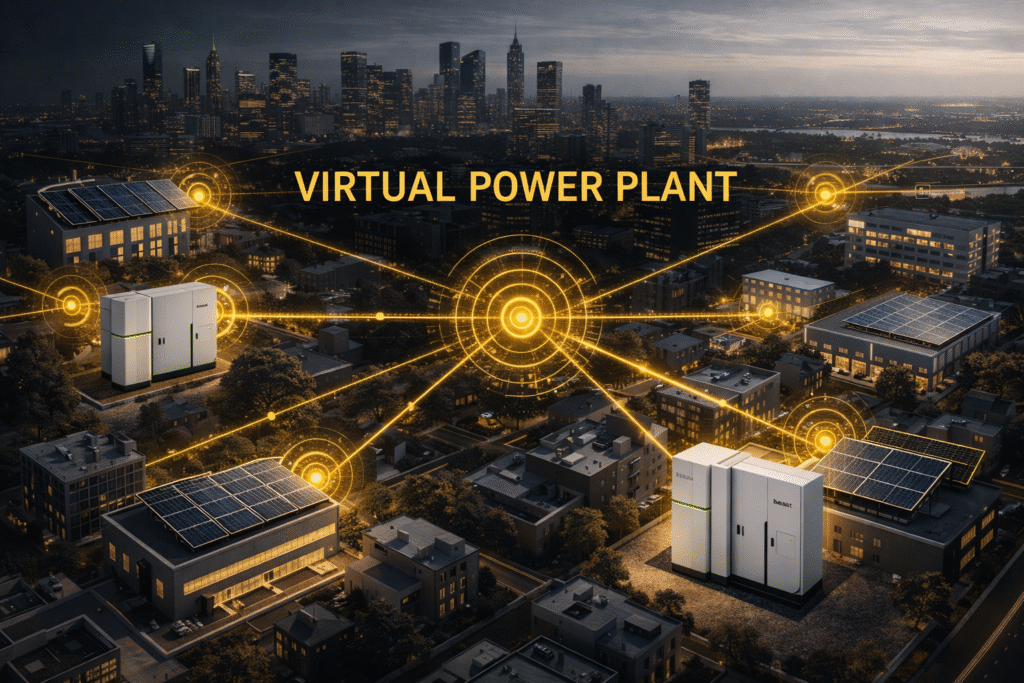
A virtual power plant is a digital network that connects many small energy devices and makes them work like a single large asset. These devices are usually home batteries, rooftop solar, heat pumps and electric cars. Software gathers them into one controllable pool that can respond to grid needs in real time.
How individual batteries become a grid asset
A single home battery cannot influence the grid. But thousands of them acting together can provide the same services as a utility scale plant. IEA and multiple European system operators confirm that aggregated behind the meter batteries can deliver frequency support, demand response and peak shaving at scale when coordinated through one platform.
The platform does three things.
• It reads grid signals.
• It decides how much flexibility is needed.
• It moves power in or out of each battery for a few minutes at a time.
Because each battery reacts instantly, the group acts as one stable block. This is why system operators treat VPPs as real assets, not as experiments.
How households earn money from VPP participation
The grid pays for flexibility. When prices spike and demand rises, the VPP can discharge part of its aggregated capacity to support the system. When there is too much renewable production, the VPP can absorb energy instead of letting the grid overload. Markets like FCR, aFRR, demand response and capacity markets pay for these actions. Households earn a share of the revenue that the VPP operator receives. Research from Europe and the US shows that properly aggregated residential storage fleets can generate stable annual returns for participants, depending on tariff structures and local regulations. In short. Your battery covers your home. The VPP turns it into a revenue producing asset.
Why VPPs matter for the future
IEA, European Commission and national regulators all point to the same trend. Renewables keep growing, grid congestion increases. Flexibility becomes the most valuable service on the electricity market. Building new physical power plants takes years. Connecting digital ones takes days. This is why VPPs are seen as essential tools for future energy systems.
For a homeowner, joining a VPP is the step that turns the battery from passive storage into part of a high value network. It strengthens the grid, improves system stability and creates an additional income stream with no loss of comfort. A VPP is a real power plant built from the devices people already have.