Maxim Evtushenko

Grid blackouts the real risk for solar owners without storage

Grid blackouts the real risk for solar owners without storage

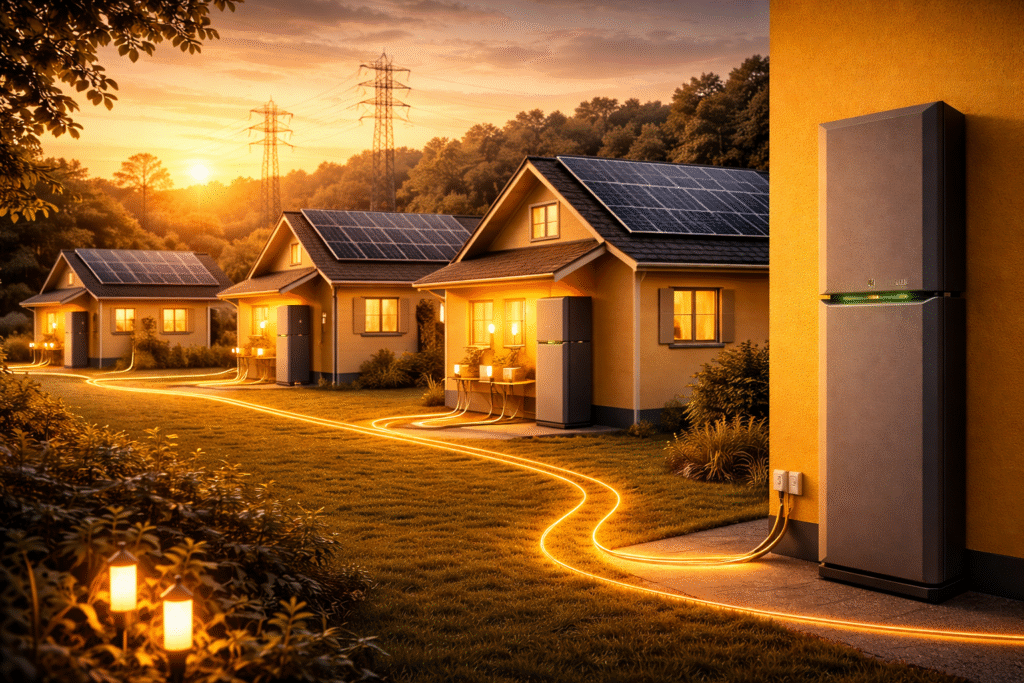
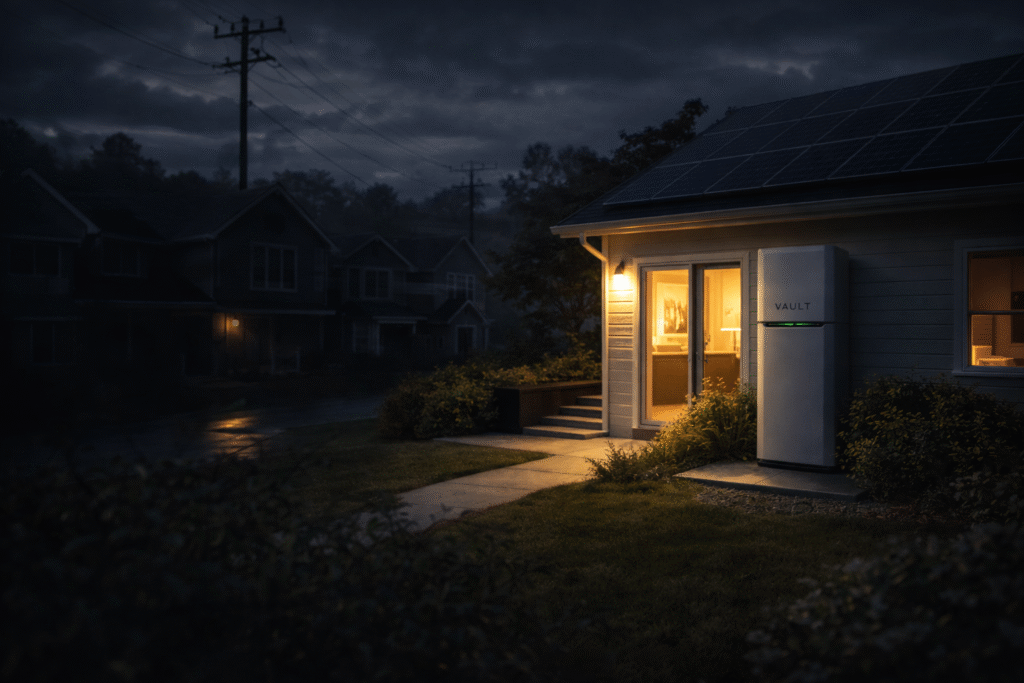
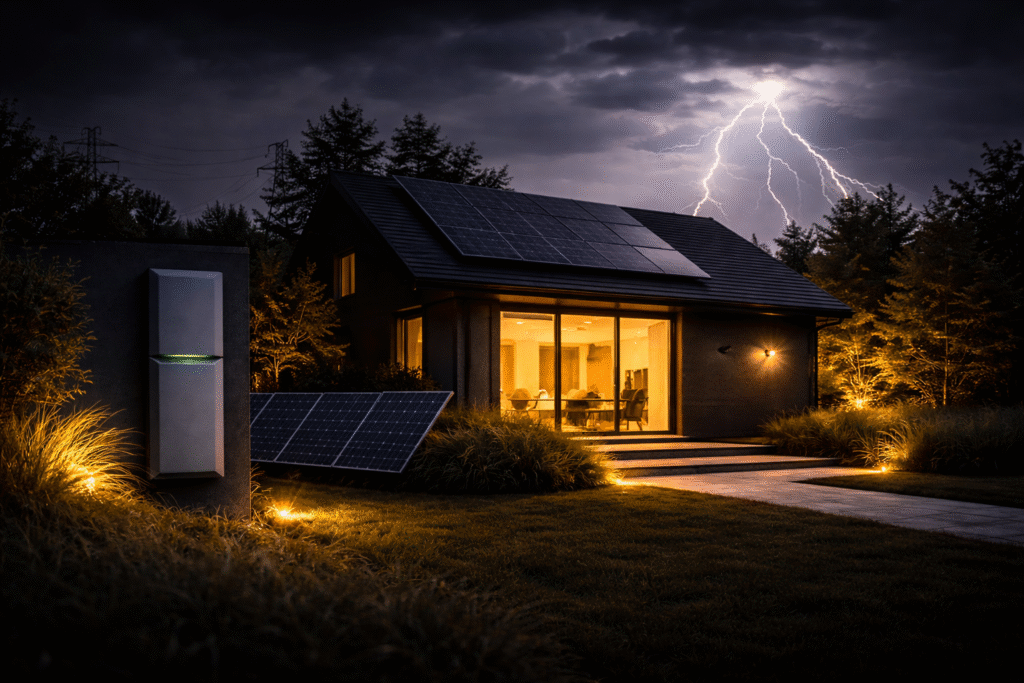
Many homeowners believe solar panels protect their home during blackouts. They do not. When the grid fails, almost all residential solar systems shut down automatically. Without storage, the home loses power even on a sunny day. A battery changes this. It provides local power when the grid is down and keeps essential loads running. Recent […]

Grid blackouts the real risk for solar owners without storage Read More »
why households will become the biggest hidden power plant in europe.

After Solar Panels are Installed. The Next Logical Step Is Storage

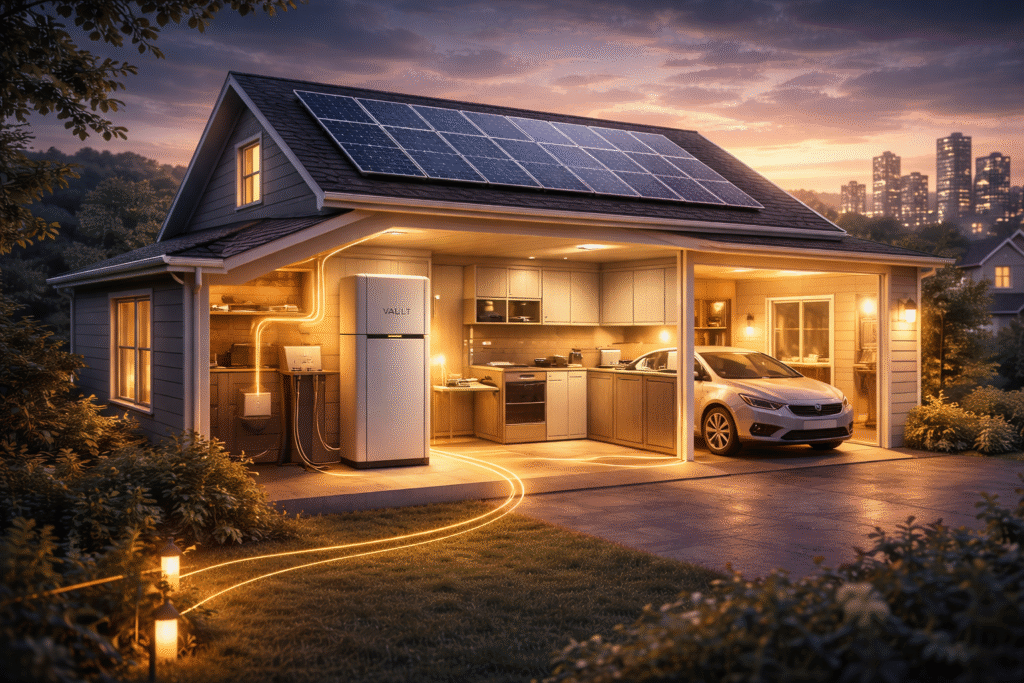
Installing solar panels is the first step toward energy independence. But solar alone is not a complete system. It produces electricity when sunlight is strongest, not necessarily when the household needs it most. The natural second phase is storage. A battery aligns production with consumption, protects the value of the solar system, and prepares the

After Solar Panels are Installed. The Next Logical Step Is Storage Read More »

Why small distributed storage beats large centralised plants

Why small distributed storage beats large CENTRALIZED plants

Distributed batteries installed in homes and businesses are becoming a stronger system asset than large centralized storage plants. They deploy faster, require less capital concentration, avoid land constraints, improve local resilience, and reduce investor risk. When aggregated, fleets of small batteries deliver more strategic value to the grid than a single large installation. Why distributed

Why small distributed storage beats large CENTRALIZED plants Read More »

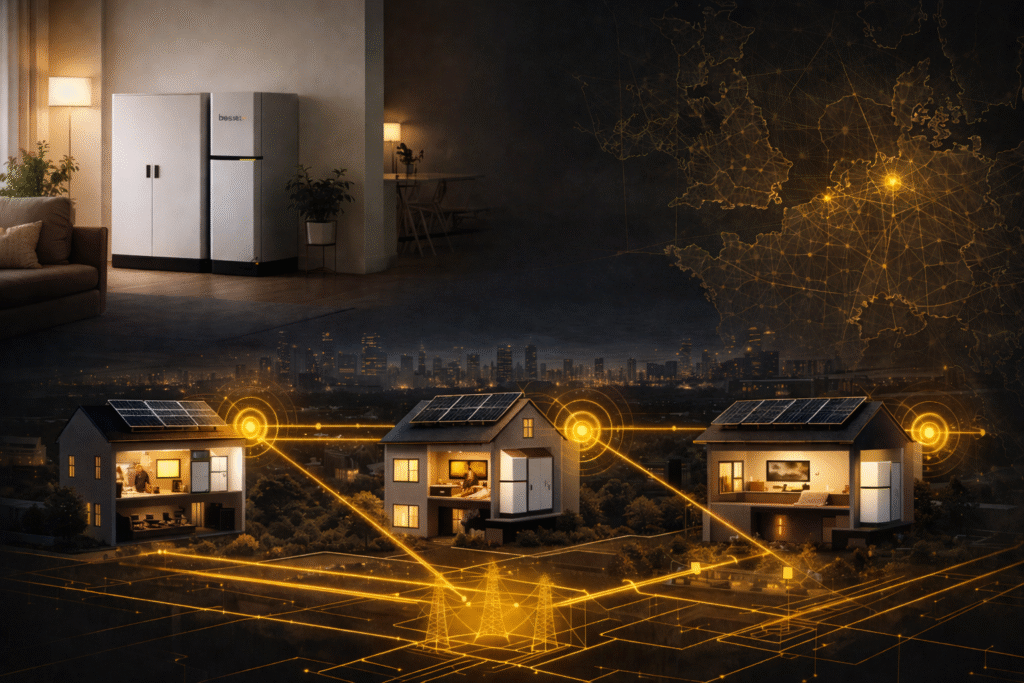
High-end editorial illustration of a distributed residential energy network at dusk. In the upper left, a modern living room features a besst energy storage unit installed indoors. Along the bottom, three suburban homes with rooftop solar panels each include a visible home battery system. Thin yellow network lines connect the houses to one another and to a stylized European map overlay in the upper right, symbolizing cross-border aggregation. Subtle transmission towers and grid lines appear beneath the homes, reinforcing that thousands of connected households can function collectively as a large, hidden power plant.

why households will become the biggest hidden power plant in europe

Europe is moving from centralised electricity generation toward distributed energy systems installed in millions of homes. Individually, solar panels, batteries, and electric vehicles are small assets. Aggregated together, they form a fast, flexible power resource that rivals large conventional power plants in scale and exceeds them in responsiveness. These assets scale rapidly, react faster than

why households will become the biggest hidden power plant in europe Read More »

Why energy storage is the next mandatory home upgrade

Why Europe is entering the storage decade

Renewable energy continues to expand, grids face structural congestion, and price volatility is becoming the new baseline. At the same time, Brussels has set explicit flexibility targets for 2030. Together, these forces are pushing Europe into the storage decade. Renewables keep rising Solar and wind deployment in Europe has accelerated sharply over the past decade.

Why Europe is entering the storage decade Read More »

Why energy storage is the next mandatory home upgrade

Why energy storage is the next mandatory home upgrade

Homeowners with solar panels hit the same wall. Panels alone do not give control. They cut the bill during the day and leave you exposed at night, during price spikes, or when the grid stumbles. A battery turns that weak setup into a complete system. Solar adoption grows The International Energy Agency (IEA) reports that

Why energy storage is the next mandatory home upgrade Read More »

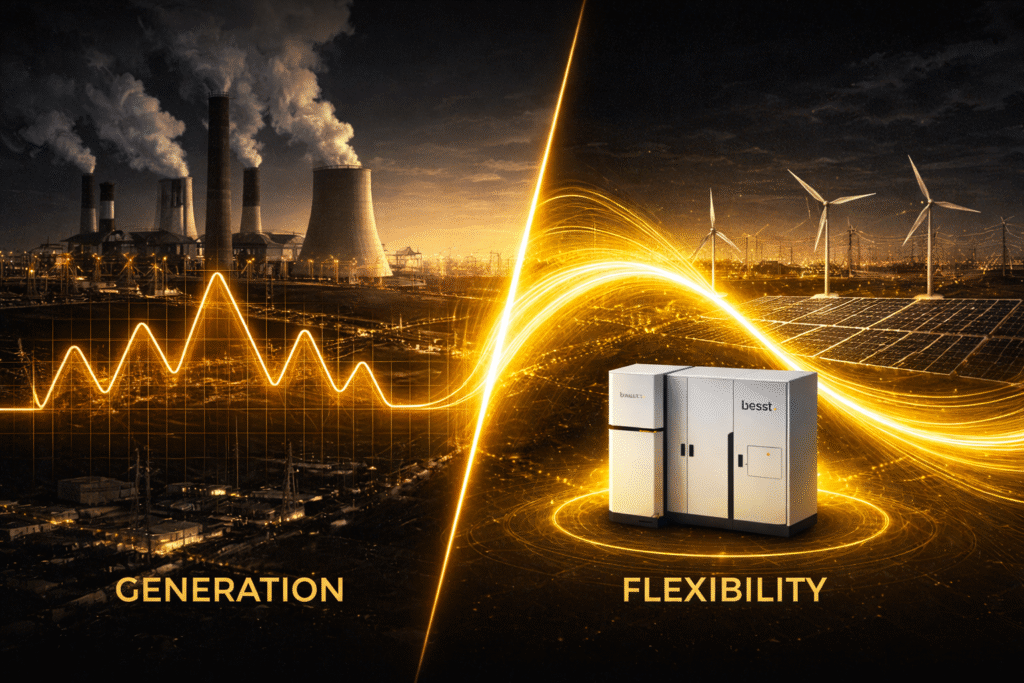
Split-screen, high-contrast conceptual illustration comparing centralized generation and energy flexibility. On the left, a large industrial power plant with cooling towers and smokestacks operates at night, overlaid with a volatile yellow energy waveform labeled “Generation.” On the right, VAULT and besst battery storage units sit in front of solar panels and wind turbines, surrounded by a smooth, flowing yellow energy curve labeled “Flexibility.” A bright diagonal line divides the two sides, emphasizing the contrast between rigid output and controlled, dispatchable energy management.

Why does the flexibility beats generation

Renewables swing between surplus and scarcity. The grid pays for the assets that can move power across that gap. That is flexibility. A battery delivers it with the highest precision. Why generation loses value When renewables surge, prices fall fast. In several European markets the price already goes near zero or below zero during strong

Why does the flexibility beats generation Read More »

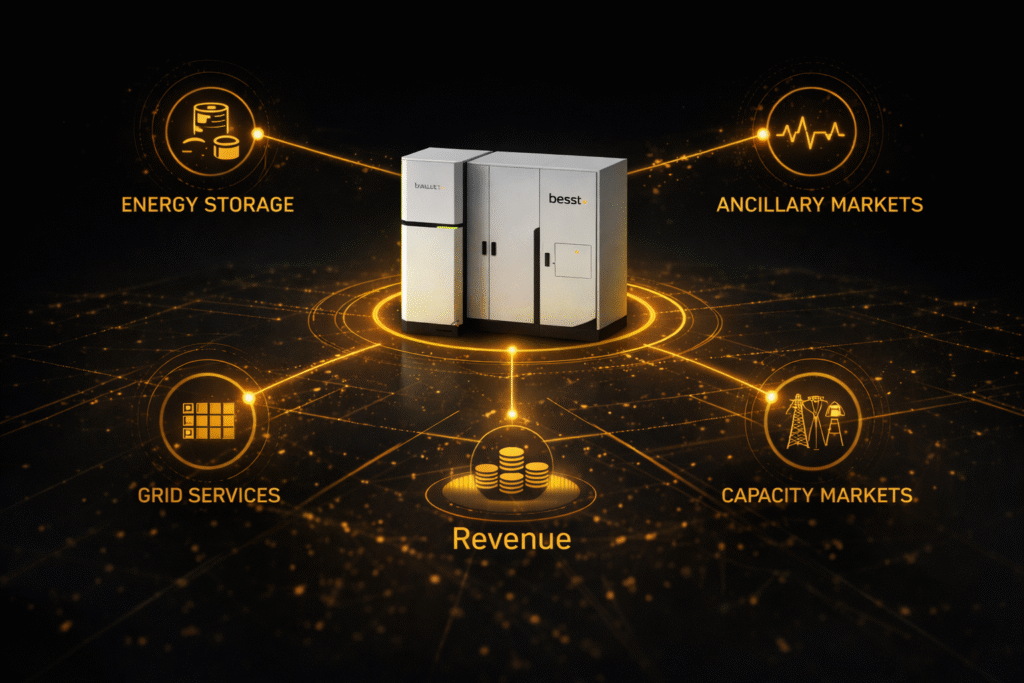
High-end, dark-themed infographic illustrating BESS revenue streams. At the center, a VAULT battery unit stands beside a besst cabinet, positioned on a circular yellow-lit platform. Thin yellow lines radiate outward from the system to four labeled nodes: Energy Storage, Ancillary Markets, Capacity Markets, and Grid Services. Each revenue stream is represented with a minimal icon and connected symmetrically, visually emphasizing stacked and diversified income sources from a single battery energy storage system.

Simple Breakdown of BESS Revenue Streams

A battery does not earn from a single source. It creates value in several ways. Some benefits come from household savings. Others come from grid services. Some come from avoiding the most expensive hours of electricity use. Combined, these streams create a stable financial effect that is often underestimated. This is how a BESS generates

Simple Breakdown of BESS Revenue Streams Read More »

Energy independence: the real reason people install BESS

Energy independence: the real reason people install BESS

Households install batteries because they want long-term financial stability. A BESS reduces exposure to peak tariffs, preserves the value of solar generation, and protects the home from price spikes and policy changes. Over ten to twenty years, these steady daily savings accumulate. This makes a BESS the closest practical equivalent to a personal pension mechanism

Energy independence: the real reason people install BESS Read More »

Scroll to Top